Running and driving is one question
A car may start but not move, or move under its own power while still being unsafe to drive on the road. In the form, run and drive means whether the vehicle can move under its own power for loading. Answer from what you already know.
If the answer is Yes, the form skips unnecessary rolling and handbrake questions. It still asks about wheel damage because a running engine does not rule out a damaged, missing or locked wheel.
If it does not drive, describe the loading restrictions
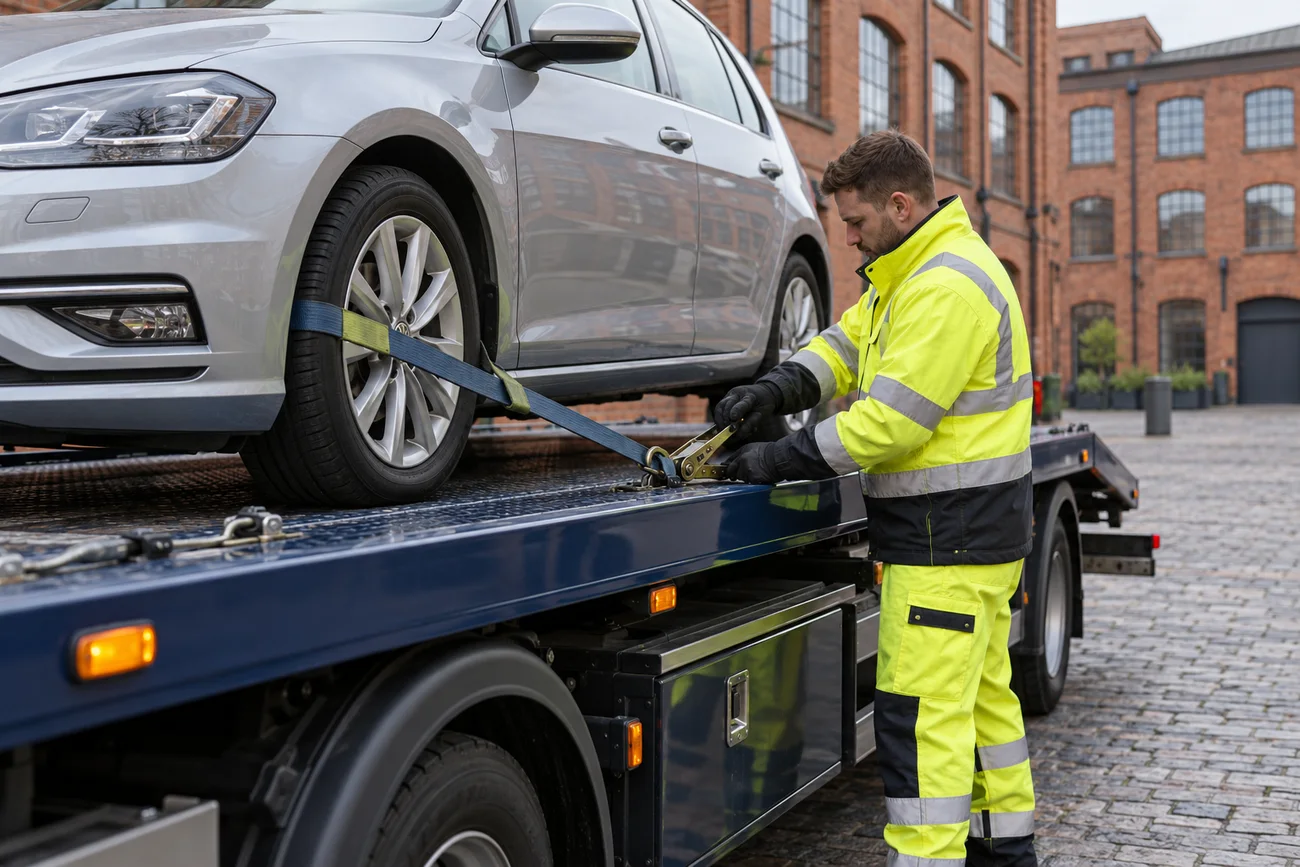
The form asks whether it rolls, goes into neutral and releases its handbrake. These details help assess how the vehicle can be moved onto the truck. Locked wheels, a damaged axle, steering problems or a handbrake that will not release may require additional equipment.
Do not push the vehicle or release a brake in an unsafe location to find out. Tell us what is known, and use the notes to explain anything that needs discussing with the operator.
Automatic, electric and hybrid vehicles
Give the exact model, transmission and fault. Some vehicles have specific transport procedures or restrictions on towing with driven wheels on the road. We assess a suitable method around the manufacturer’s guidance and the vehicle’s condition.
If the keys are missing, the battery is discharged or an electronic parking brake is locked, say so before booking. Do not attempt unfamiliar release procedures just to make collection easier.
Location and delivery complete the enquiry
A non-runner in an open yard presents a different problem from one in a basement car park. Send the exact location, access details and a full delivery address or postcode. Tell us about opening hours or someone who must release the car.
Our team uses this information to check equipment, a price and availability. The collection is confirmed only once the required arrangements have been agreed.