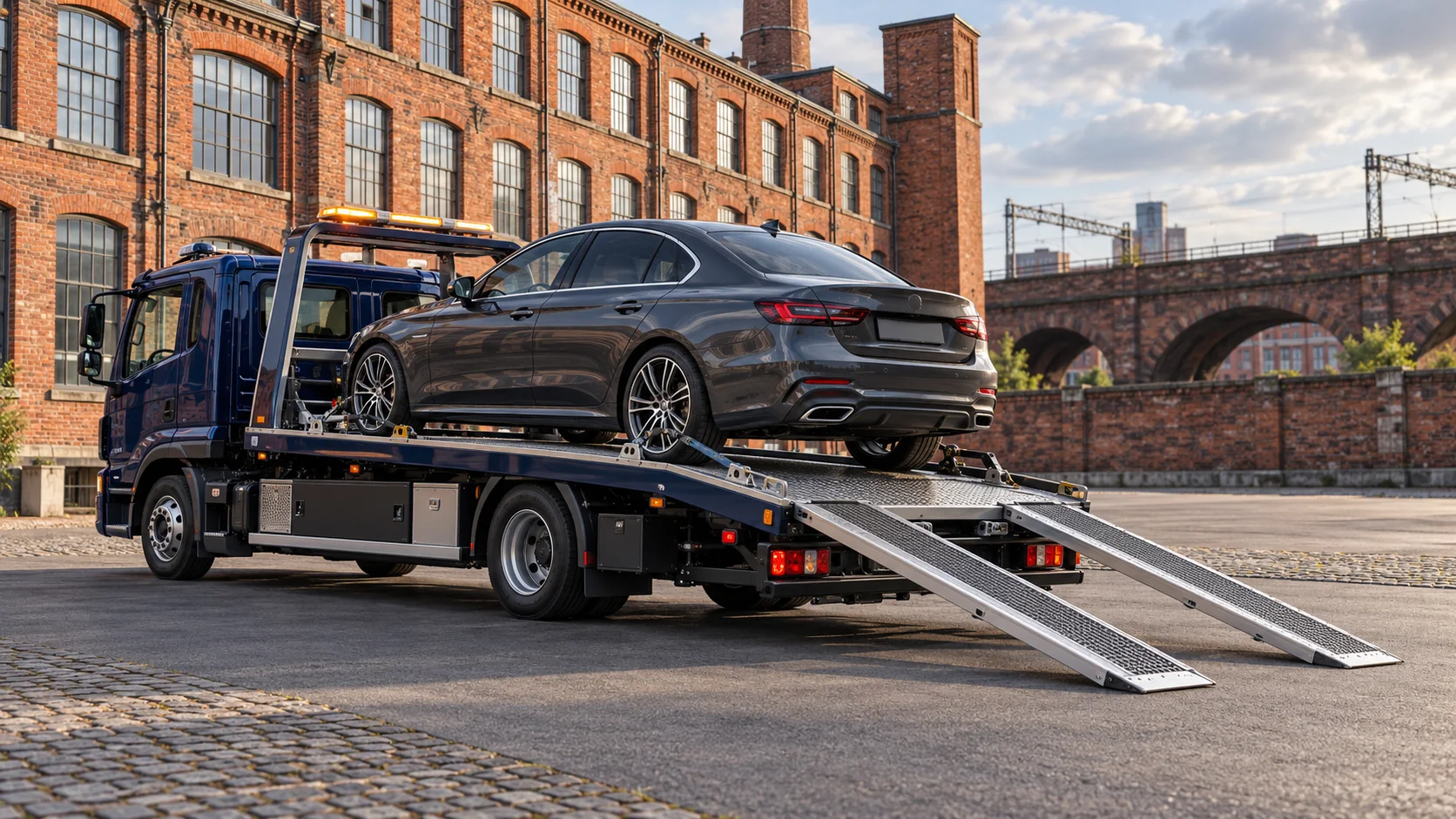
Branch, release and loading details first
An auction collection needs more than the auction name. Give the exact branch or collection address, vehicle make and model, the destination and the collection date you are working towards. Tell us whether release paperwork, payment clearance or a collection slot is still outstanding.
We assess requests involving Copart, BCA, Manheim, SYNETIQ/IAA and other auction sellers. Naming these businesses describes collection enquiries only; we do not imply an official partnership or guaranteed access to every site.
Auction condition reports are a starting point
A run-and-drive description is useful, but it may not answer whether the car has wheel or suspension damage, a flat tyre, missing keys or a locked handbrake. Give all known loading details and tell us if the vehicle differs from its listing.
The operator needs to assess suitable equipment and the branch’s loading arrangements. Do not assume forklift availability, a particular loading method or unrestricted collection hours. These vary by site and must be checked.
From the sale to your chosen destination
We arrange enquiries for delivery to a home, garage, bodyshop or business address. Confirm that someone can receive the vehicle and that a truck can reach a safe unloading point. If a garage has restricted hours, add those details to the notes.
We confirm the transport price and available collection window before a booking is agreed. Auction release, storage and any seller fees remain separate unless explicitly included in the quote.
Good to know before collection.
Can you collect a non-runner from an auction?
We assess non-runner collections. Tell us whether it rolls, selects neutral and releases its handbrake, plus any wheel or suspension damage. Equipment and site loading conditions must be confirmed.
Do you book collection slots?
Tell us what the auction requires and whether a slot has already been arranged. Our team will confirm the collection process and any information needed before booking.